


Homeownership in 2026 isn’t only a question of whether a family can handle a monthly payment. It’s also a question of whether the transaction itself can hold together long enough to get a family to the closing table.
That shift is showing up everywhere, even among buyers who should be fine on paper. The confidence problem is easy to measure. 62% of Americans say buying a home in 2026 feels unrealistic, up from 49% in 2025.
The fragility problem is harder to see until you’re inside a deal. In December 2025, 16.3% of homes that went under contract ended up canceled, more than 40,000 purchase agreements that never made it to closing.
Then there’s the demographic pressure that confirms this isn’t a passing mood. The National Association of Realtors reported first-time buyers at 21% of the market and a median first-time buyer age of 40.
Put those together and you get a clear picture of the environment: affordability is tight and the purchase process breaks more easily than people expect. A lot of buyers don’t lose because they suddenly become unqualified, but because they run out of financial room.
That “room” is cash timing, calendar timing, and deal structure.
Cash timing is the first trap. A household can budget for a payment and still get squeezed by the front-loaded costs that arrive all at once: earnest money, inspections, appraisal, moving, and the regular month of bills that doesn’t stop just because you’re buying a house. The down payment conversation often turns into advice to “just save more,” but the timeline has stretched far beyond what most families can compress. Realtor.com analysis says the typical household needs nearly seven years to save for a median down payment.
Calendar timing is the second trap. When the process drags, risk accumulates. Rate locks expire. conditions stack. repairs become a negotiation spiral. sellers lose patience. buyers get stretched. The Redfin cancellation data is the visible outcome of that dynamic.
Deal structure is the third trap. In a market like this, a buyer can do everything right and still lose if the offer looks weak to a seller, or if the buyer has to ask for concessions so large that the seller chooses the next offer, even if it’s slightly lower. What sellers are buying in 2026 is certainty. A clean path to close. Fewer surprises. Less drama.
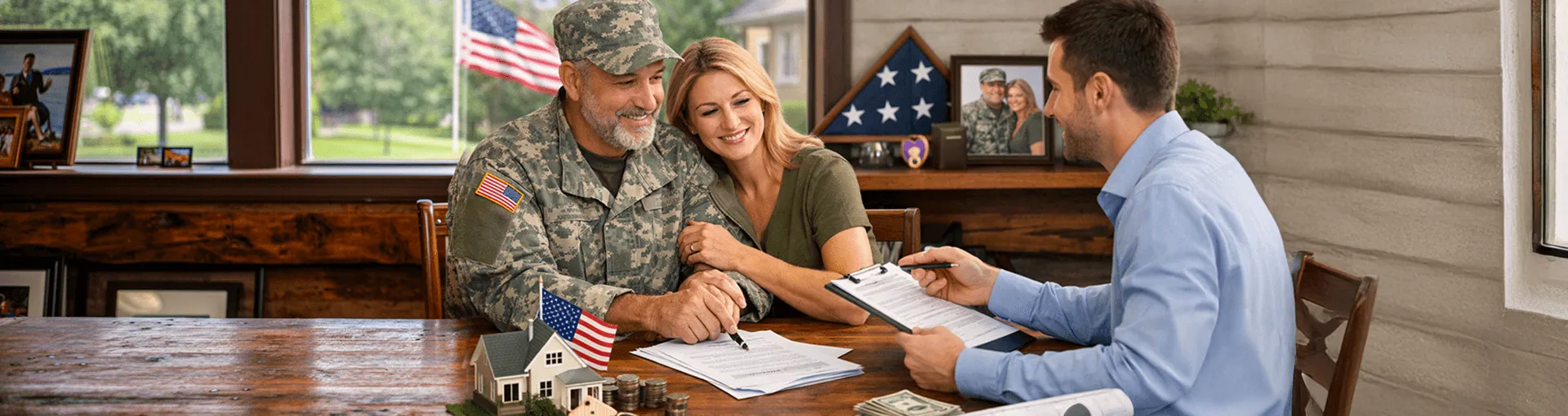
Veterans operate inside the same environment. They face the same inventory constraints, the same rates, the same competition, and the same process fragility. The difference is that veterans have earned benefits that can be used to strengthen their position if they’re structured and executed the right way.
That is where NewDay USA’s NewDay Home Program comes in. It exists to reduce the predictable points of failure for qualified veteran buyers. The goal is to make buying a home more executable.
The NewDay Home Advantage Loan is designed to do four things that line up with how deals actually behave.
- It reduces the upfront cash shock so a qualified buyer isn’t forced to pause the search, weaken the offer, or empty reserves just to get through closing week.
- It reduces reliance on oversized seller concessions, which often turn a purchase into a long negotiation and can force buyers into longer house hunts, weaker positioning, and more calendar risk.
- It supports speed and certainty to close, because the longer a deal sits open, the more ways it can break.
If you’re a veteran thinking about buying in 2026, it helps to think about the purchase the way the process actually behaves. The monthly payment is only one part of the decision. The rest is operational.
A short readiness check before you write offers:
- Payment: the payment fits with margin, not hope.
- Cash timing: you know what cash is required, when it’s required, and you have a plan that doesn’t drain every reserve.
- Earnest money: your offer looks serious on day one.
- Inspection: you have a plan for the first surprise.
- Calendar: your lender and agent can execute fast enough that the deal doesn’t stretch into failure.
In buying a home, Veterans don’t need hype. With their service and sacrifice, what they need most is a process that holds. NewDay USA’s NewDay Home Program program delivers on that need, because it is built to reduce the failure points that break deals for qualified buyers in a high-pressure market.