

Not all homes are equal in the eyes of a lender, and when you're using a VA loan, the property itself carries as much weight as your credit profile. The type of home you're buying determines which standards apply, what documentation is required, and in some cases, whether the loan can close at all.
The short answer: VA loans have strict property eligibility rules, and those rules vary significantly by property type. Veterans using VA benefits face a different set of conditions than borrowers using other loan programs, particularly when it comes to condominiums and manufactured housing. Understanding those differences before you make an offer can save weeks or the deal entirely.
Why Property Type is Important With a VA Loan
The VA loan program is backed by the federal government, which means the government, not just the lender, has a financial stake in the collateral. That's why VA loans impose minimum property standards that go beyond what a conventional lender typically requires.
For VA loans, the VA's Minimum Property Requirements (MPRs) ensure that every property used as collateral is safe, structurally sound, and sanitary. The VA-approved appraiser is responsible for flagging any conditions that fall short of those standards during the appraisal. A full description of the MPRs can be found in Chapter 12 of VA Pamphlet 26-7, the VA Lender's Handbook.
These requirements exist to protect the government's guaranty, the lender's collateral, and the borrower. A home that can't be easily sold or that poses safety risks is a liability to everyone in the transaction. Unlike FHA loans, which have their own parallel set of standards under HUD, VA loans carry no mortgage insurance requirement. That means no upfront mortgage insurance premium and no annual premium, regardless of down payment or loan-to-value.
Single-Family Homes: The Straightforward Path
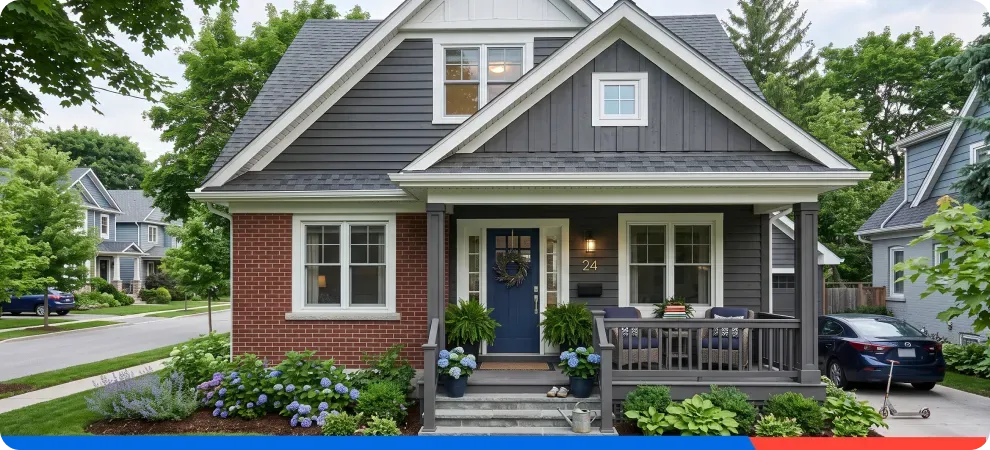
For VA loans, a standard single-family, site-built home on owned land is the most straightforward property type to finance. These properties typically go through a standard appraisal process with no layered approval requirements.
Under VA guidelines, single-family properties must meet MPRs covering basic structural, mechanical, and safety conditions. That includes:
- Functioning utilities
- A roof that keeps out the elements
- Sound foundations
- No evidence of active pest infestation
- No lead paint hazard on homes built prior to 1978
The appraiser notes required repairs directly in the report, and those items must be addressed before the loan closes. It's worth noting that a VA appraisal is not a home inspection. The appraisal establishes market value and checks for visible MPR compliance. Veterans are strongly encouraged to obtain a separate home inspection for a full assessment of the property's condition.
Condominiums: Project-Level Approval Is Required
Condominiums are where VA borrowers most often run into unexpected delays, and where the VA program diverges most sharply from other loan options.
The VA does not approve condos on a unit-by-unit basis. The entire condominium development must be reviewed and approved before any individual unit within it can be financed with a VA loan. Requirements for this review are detailed in Chapter 16 of VA Pamphlet 26-7, and they cover the HOA's financial health, reserve funding, insurance coverage, governing documents, owner-occupancy ratios, and any pending litigation.
Veterans can check a development's current standing using the VA's condo search tool, which is accessible through the Veterans Information Portal. A project listed as accepted allows underwriting to proceed. One that is expired, withdrawn, or absent from the list requires the lender to submit a project review package, a process that can take several weeks depending on HOA cooperation.
Critically, project approval only clears the community-level hurdle. The borrower still has to qualify on income, credit, and assets, and the unit itself must pass the VA appraisal for value and MPR compliance.
One important distinction for Veterans comparing loan options: FHA offers a Single-Unit Approval (SUA) path that allows individual condo units to qualify even when the overall project lacks full FHA approval. The VA does not have a comparable option. If the development isn't on the VA-approved list and can't be approved before closing, VA financing isn't available for that unit.
Manufactured Homes: Stricter Rules, But Still Achievable
Manufactured homes are eligible under the VA loan program, but they carry the most stringent documentation requirements of any property type. Veterans considering this path should understand the requirements before making an offer.
To qualify for a VA loan, a manufactured home must:
- Have been built on or after June 15, 1976 to meet HUD's Manufactured Home Construction and Safety Standards
- Bear a HUD certification label (commonly called a "red tag") on the exterior of each section
- Have an interior data plate confirming specifications and compliance
- Be permanently affixed to a foundation that meets the HUD Permanent Foundations Guide and local building codes
- Be titled as real property rather than personal property under state law
- Meet all standard VA MPRs for safety, sanitation, and structural soundness
Size requirements also apply. Single-wide units must have a minimum of 400 square feet of living area. Double-wide units require at least 700 square feet. These requirements come directly from Chapter 12 of the VA Lender's Handbook.
Modular homes are a related but distinct category. Because they are factory-built to local building codes rather than HUD standards, the VA generally treats them the same as site-built homes, which makes them easier to finance than manufactured homes.
One practical consideration: most lenders will not finance a manufactured home that has been moved from its original installation site. This is a common lender overlay, not a formal VA rule, but it is widespread enough to be treated as a hard stop in most markets.
Multi-Unit Properties: Buying a Home That Pays for Itself
The VA loan program allows Veterans to purchase properties with two to four units, provided the Veteran occupies one of those units as a primary residence. That means a Veteran can purchase a duplex, triplex, or four-plex, live in one unit, and rent the others.
Rental income from non-occupied units may be considered in qualifying, subject to lender guidelines and appraisal support. All units must meet VA MPRs individually, and the property must function as a residential property. Multi-unit loan limits are higher than single-family limits under the VA program to reflect the increased acquisition cost.
For multifamily properties, the VA also requires that each unit has its own utility shut-off system and that any shared common areas, such as laundry facilities, are accessible to all units.
Mixed-Use and Other Property Considerations
The VA has strict requirements around the residential character of a financed property. Commercial activity on the premises cannot compromise the home's safety, habitability, or residential character. Mixed-use properties with significant commercial components are generally not eligible for VA financing.
Properties on large acreage can qualify, but the residential use must be clearly dominant. Outbuildings are acceptable if they are typical for residential use. Active farming or agricultural operations on the same parcel create eligibility complications.
Co-ops are not eligible for VA loans.
For Veterans who want to compare how these rules differ from FHA, the key takeaway is this: FHA's property standards follow a similar intent but apply different criteria, allow more flexibility on condominiums through single-unit approval, and require mortgage insurance that VA loans do not. Veterans who have the VA benefit available are generally better served using it.
Ready to explore your VA loan options? Keep reading for more articles and resources built specifically for Veterans navigating the homebuying process.
FAQs
Can I use a VA loan on a property that is not VA-approved yet?
It depends on the property type. For condominiums, the project must either already be on the VA-approved list or receive VA approval before closing. For single-family homes and manufactured homes, there is no pre-approval list. The property must simply pass the VA appraisal and meet MPRs. Your lender can help clarify the approval path.
Does the VA offer any equivalent to FHA's single-unit condo approval?
No. The VA requires the entire condominium project to be approved before any unit within it can be financed with a VA loan. FHA's Single-Unit Approval allows individual units to qualify even in non-approved projects, but the VA does not offer a comparable path. If the project isn't approved and can't be approved before closing, VA financing won't be available for that unit.
What disqualifies a manufactured home from VA financing?
The most common disqualifiers are: built before June 15, 1976; missing HUD certification labels or interior data plate; titled as personal property rather than real estate; not on a permanent foundation; or previously moved from its original installation site.
Can I use a VA loan to buy a duplex or triplex?
Yes, as long as you occupy one unit as your primary residence. The VA allows financing on properties with up to four units. Rental income from the other units may factor into your qualifying income depending on your lender's guidelines and the appraiser's income analysis.
What happens if a property fails VA MPRs during the appraisal?
The appraiser documents the deficiencies as required repairs. In most cases, those repairs must be completed and re-inspected before the loan can close. The seller can agree to make the repairs, the buyer can pay for them, or, in limited circumstances, the VA may issue a waiver, though waivers are not guaranteed. Walking away is always an option if repairs are too extensive.