



Both VA and FHA loans require borrowers to demonstrate a two-year employment history. But that requirement is more flexible than most people assume. Neither program demands two continuous years with the same employer. Job changes, career shifts, and even gaps in employment can be acceptable under the right circumstances, provided the borrower can show that their income is stable, documented, and likely to continue.
What underwriters care about most is the trajectory. Are you earning steady or increasing income in a field where your skills and experience support continued employment? If the answer is yes, the specifics of how you got there matter less than the overall picture.
The Two-Year Requirement: What It Actually Means
Both programs use a two-year lookback as their baseline. For FHA loans, this is codified in HUD Handbook 4000.1, which serves as the FHA's single-family housing policy guide. The handbook requires lenders to verify the borrower's employment for the most recent two full years. For VA loans, the VA Lender's Handbook (Chapter 4) sets a similar standard, directing lenders to verify a minimum of two years of employment.
Neither program requires the borrower to have held the same position for two years. A borrower who worked three different jobs over the past 24 months can still qualify, as long as the overall history reflects stability and the current income is verifiable. The two-year window can also include time spent in school or military service. A recent college graduate or a Veteran who just separated from active duty may count that education or service toward the requirement, provided documentation like transcripts or discharge papers supports it.
How FHA Underwriters Evaluate Employment
FHA underwriting focuses on whether income is "effective," meaning it is verified, stable, and expected to continue for at least three years from closing. The lender doesn't just confirm that the borrower has a job. The underwriter evaluates the nature of the income, the borrower's history of earning it, and the likelihood it will persist.
Job Changes and Frequent Moves
HUD 4000.1 includes specific guidance for borrowers who have changed jobs more than three times in the previous 12 months or who have changed lines of work. In those cases, the lender must obtain additional documentation: either transcripts or training records showing qualification for the new position, or employment records demonstrating continual increases in income or benefits.
A promotion, a lateral move within the same industry, or a transition from school to a related career field are all generally viewed favorably. A pattern of declining income or unexplained job hopping is not.
Employment Gaps
For borrowers with gaps of six months or more, FHA guidelines require the borrower to have been employed in their current job for at least six months at the time of case number assignment and to show a two-year work history prior to the gap using standard employment verification. Shorter gaps of a few weeks or months between jobs typically require only a written letter of explanation.
Acceptable reasons for longer gaps include returning to the workforce after raising children, completing education or training, recovering from a medical issue, or military service. The key is that the borrower can demonstrate re-established, stable income.
Self-Employment
Self-employed borrowers face tighter documentation requirements. FHA generally requires a full two-year history of self-employment, supported by the most recent two years of personal and business tax returns. An exception exists if the borrower was previously employed in the same line of work before starting their own business.
How VA Underwriters Evaluate Employment
VA loan underwriting shares the same two-year baseline but applies it with built-in flexibility designed to accommodate the realities of military life. The VA's Credit Standards guidance states that if a Veteran does not have a full year at a current job, the VA does not require an automatic denial. Instead, the underwriter reviews the full picture: prior experience, education, training, and whether the current role is a logical continuation of the borrower's career path.
Military-to-Civilian Transitions
Veterans separating from service face a unique situation. They may not have civilian employment history at all. VA underwriters address this by evaluating whether the Veteran's military occupational specialty (MOS), education, and training align with the civilian job they've secured or are about to start. If the correlation is strong enough, a Veteran can qualify with an offer letter before their first day of work, provided the offer is non-contingent and the start date falls within 60 days of closing.
Active-duty income is verified through a Leave and Earnings Statement (LES), which replaces the standard verification of employment. Base pay, Basic Allowance for Housing (BAH), and other military allowances can all count as qualifying income, as long as they are expected to continue.
Job Changes in the Civilian Workforce
For Veterans and other VA-eligible borrowers who have been in the civilian workforce, job changes are evaluated much like they are under FHA guidelines. A move within the same industry at comparable or higher pay is typically straightforward. A complete career change or a shift from W-2 employment to self-employment or contract work introduces more scrutiny and may require the borrower to have 12 months or more in the new role before the lender is comfortable proceeding.
Employment Gaps
Short gaps are common and manageable. The VA does not define a specific threshold the way FHA does, but lenders generally expect a written explanation for any gap longer than 30 days. Gaps tied to education, military transition, or medical recovery are treated more favorably than unexplained absences. The VA Lender's Handbook instructs underwriters to evaluate each case individually and document their reasoning.
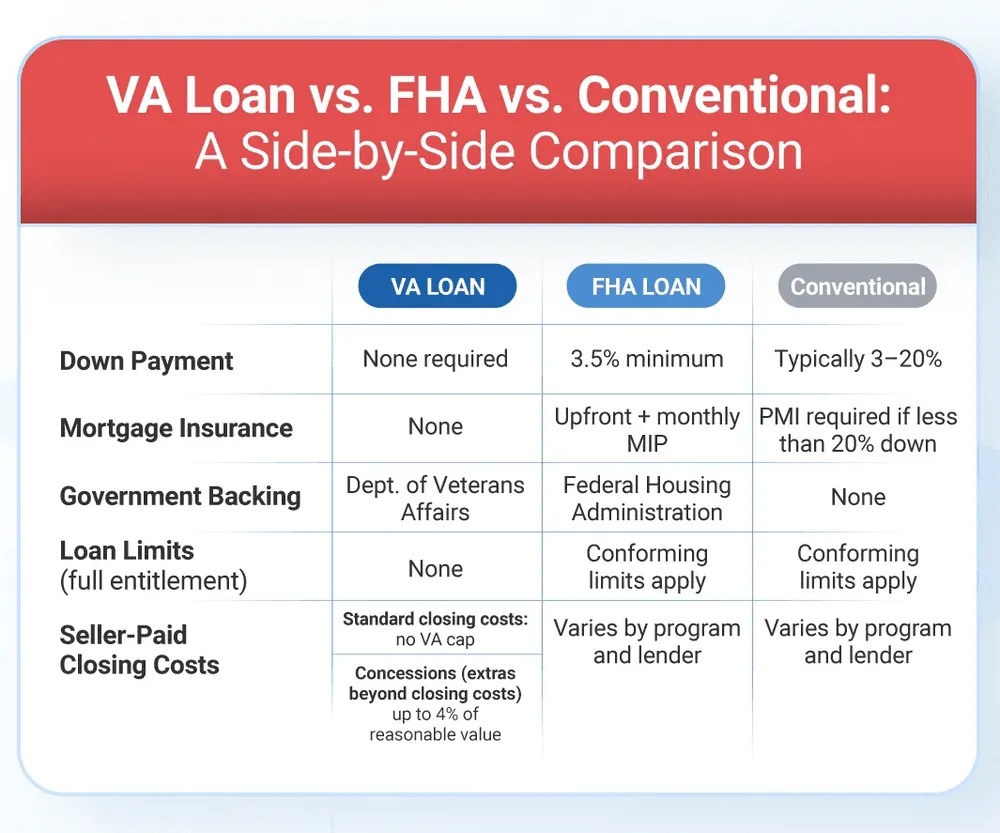
Where VA and FHA Guidelines Overlap and Diverge
The two programs share a common foundation: two years of history, income stability, and documented verification. But there are meaningful differences in how they handle certain situations.
Income that must be "likely to continue." Both programs require income to be expected to continue. FHA defines this as at least three years from closing. The VA uses similar language but applies it with more case-by-case discretion.
Frequent job changes. FHA has a specific trigger: more than three employer changes in 12 months requires additional documentation. The VA does not set a hard number but expects underwriters to evaluate the pattern and document their conclusions.
Self-employment. Both programs require two years of tax returns. FHA allows an exception for borrowers who were previously employed in the same field. The VA takes a similar approach but leaves more room for underwriter judgment.
Re-verification before closing. Both programs require the lender to reverify employment shortly before closing. For FHA, this must happen within 10 days of mortgage disbursement. For VA loans, lenders follow Fannie Mae's verbal verification of employment guidelines or their own internal standards, confirming that the borrower is still employed before funding.
Military-specific flexibility. This is where the VA stands apart. No other major loan program has built-in provisions for MOS-to-career correlation, offer-letter qualification for transitioning service members, or LES-based income verification. Veterans and active-duty borrowers benefit from underwriting standards that were designed around the realities of military service, including frequent relocations and transitions between duty stations.